Your Brand's Personal LLM - The Brain vs Generic AI
By Alexander Augustesen — CEO, Zuuvi
Every brand has a moment, where someone looks at what's actually running across their markets and asks the same quiet question: how did we end up here? The campaign was signed off. The brand book exists, consisting of forty-six beautifully on-brand pages. Everyone is competent and well-meaning.
And yet the thing running in the 11th market is quite far from the thing anyone approved.
If you're trying to scale advertising across markets, that gap is the whole problem - and it isn't solved by working harder or buying another tool.
It's solved by adding the layer most brands are missing.
Why scaling ads across markets breaks brand control
At small scale, you don't need any system to stay on-brand. A founder running three ads in one market is the system - they see everything, they approve everything, and the brand stays intact because one brain holds all of it.
The trouble begins precisely when you succeed and you scale. Take one campaign and push it across twenty-plus markets, six channels, and a hundred-plus formats, and the number of independent decisions required to ship it runs into the thousands - each made by a different person, under different local pressure, each individually reasonable. No single brain can hold that picture anymore.
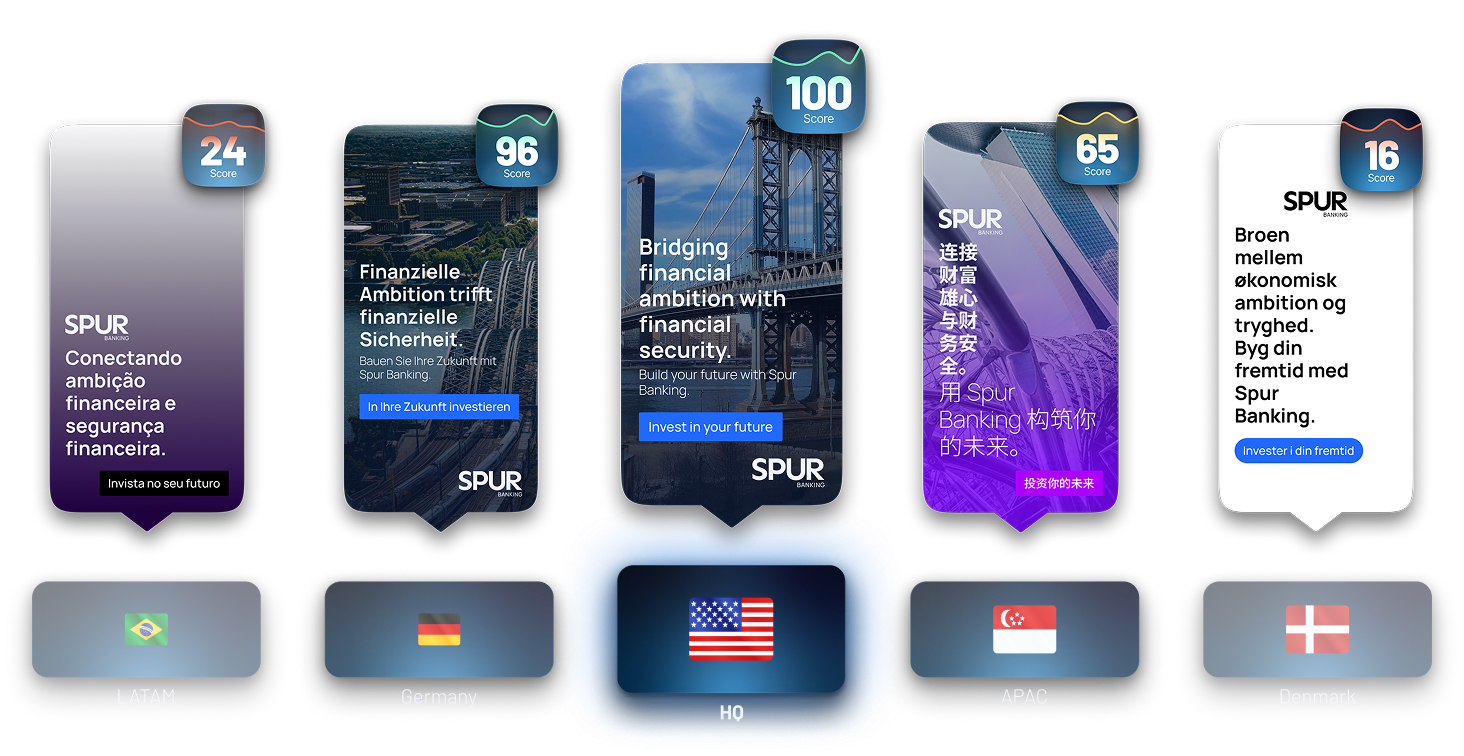
"The growth you wanted is the thing that breaks brand consistency, and it breaks it silently, because - before Zuuvi - no one has been able to see the drift across all markets at once."
This is why brand drift across markets is a structural problem, not a competence one. You can't solve a missing layer with more talented people - just like you can't solve a missing bridge by hiring stronger swimmers.
What to look for in a platform for scaling ads across markets
When brands evaluate platforms for multi-market advertising, most compare features that speed up a single step - faster design, faster resizing, faster translation. Useful, but it's the wrong evaluation, because the thing that breaks at scale isn't any single step. It's the governance between steps.
The capabilities that actually determine whether you keep brand control while scaling are: brand rules enforced automatically as creative is produced and adapted (not checked manually at the end); on-format, on-spec output across every channel without rebuilding by hand; localization that preserves brand and layout integrity across markets; and unified, cross-channel performance data you own, so on-brand and high-performing stop being a trade-off.
That bundle is not a marketing tool. It's Creative Infrastructure.
Creative Infrastructure: the platform layer for multi-market advertising
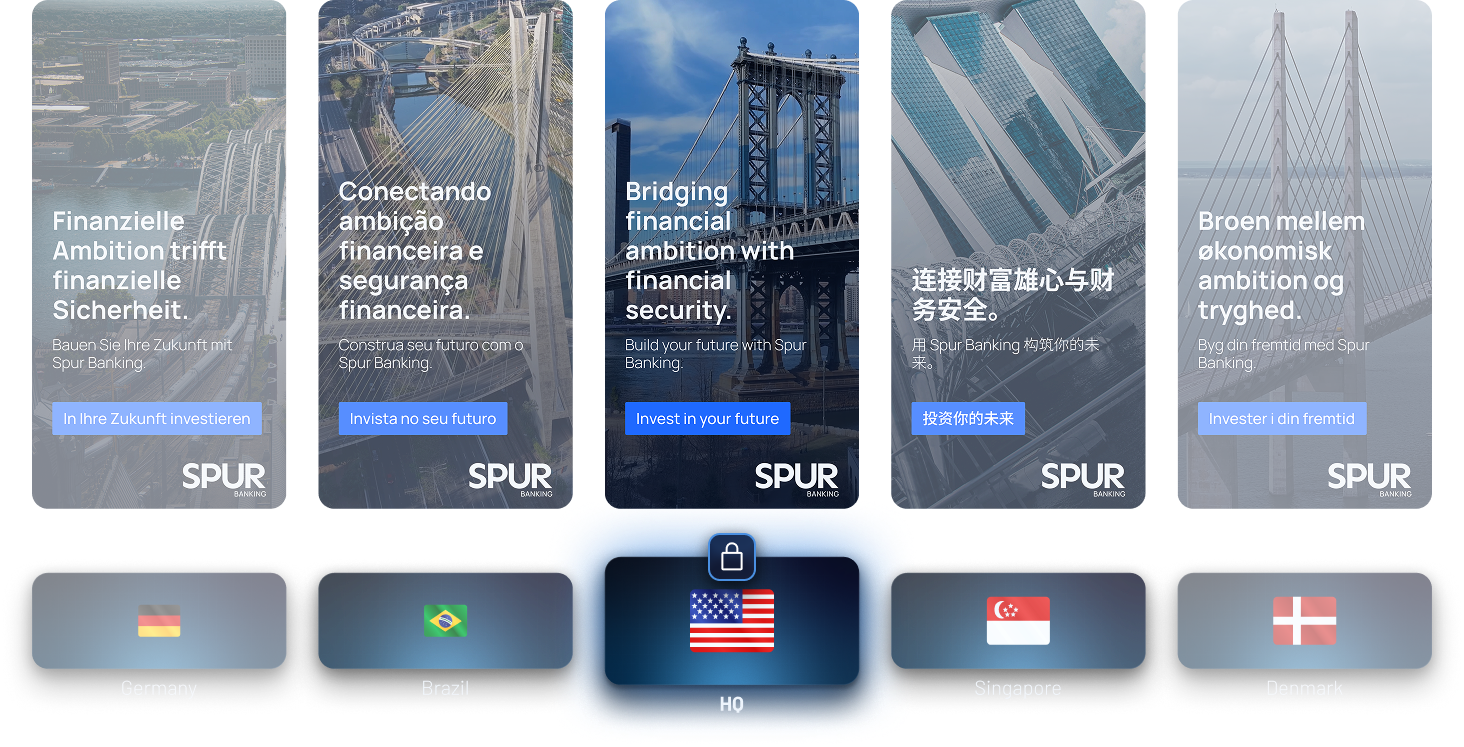
Creative Infrastructure governs everything that happens to a piece of creative between the brief and the moment your audience sees it, so every output stays on-brand, on-format, and on-performance no matter how many markets, channels, or hands it passes through.
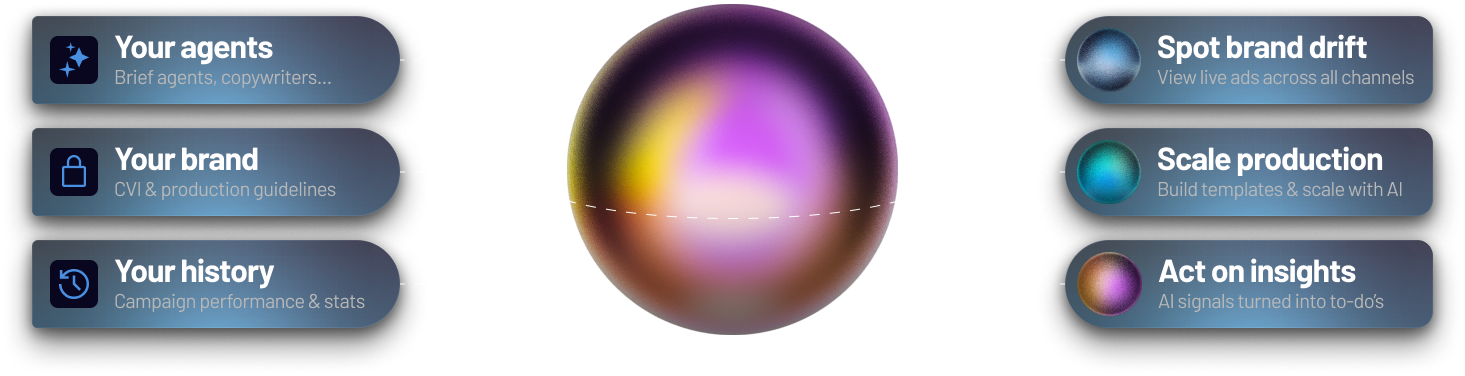
"It is basically the foundational layer between your brief at HQ and what the audience sees."
We have infrastructure for almost everything else in the chain. Finance has a ledger. Supply chains have systems that would set off alarms if a factory in one country quietly started shipping a different product. Engineering has version control, so two people can't overwrite each other's work without someone noticing. Creative - the thing your entire brand is judged on across every market - has historically had a PDF-format brand book and a lot of hope. A Creative Infrastructure Platform is what closes that gap.
How it keeps you on-brand and compliant across markets
The difference between guidelines and infrastructure is the difference between a style guide and spellcheck. A style guide tells a thousand people the rules and trusts them to remember, under deadline, in every market. Spellcheck just applies the rule as you type, whether or not anyone's paying attention.
In that analogy, Creative Infrastructure is the spellcheck: it enforces brand and compliance rules as the work is made, so staying on-brand across markets becomes the default rather than something exhausted teams have to police after the fact.
That's also why it makes you faster, not slower. The instinct when brands drift is to add approval layers and review meetings - which slows everyone down and still doesn't scale to the volume that caused the drift. Governing the brand structurally means you get speed and consistency at once instead of trading one for the other.
The honest version
I'll be straight about the bias here: I run a company built on this idea, so of course I think the layer matters. But we built Zuuvi around Creative Infrastructure rather than another creative tool because we kept watching brilliant brands, with brilliant agencies and serious budgets, lose brand control the moment they scaled across markets. The pattern was too clean to be about talent.
"Tools improve output. Infrastructure defines outcomes. If you're scaling ads across markets, the question isn't which tool to add next - it's whether anything is governing the brand between the brief and the impression."
Key takeaways
- Scaling advertising across markets without underlaying infrastructure breaks brand control because thousands of independent, reasonable local decisions add up to drift no single person can see.
- Creative tools and asset managers speed up individual steps; they don't govern the outcome across markets, which is why brand drift persists despite a full martech stack.
- Creative Infrastructure is the platform layer that enforces brand and compliance rules automatically as creative is produced and adapted across markets and channels.
- It delivers speed and consistency together - brands on Zuuvi report up to 4x faster time-to-market, 90% cost reduction, and 70% better CTR performance.
How do brands stay on-brand and compliant across markets? By enforcing brand and compliance rules at the infrastructure level rather than relying on guidelines and manual review. The rules are applied automatically as creative is produced and adapted, so consistency is the default across every market and channel.
Why isn't a creative automation or design tool enough to scale across markets? Those tools improve a single step. Brand drift happens between steps, across markets and formats, where no tool is governing the whole chain. Faster production without governance simply produces inconsistency faster.
Does adding governance slow campaigns down? No — done structurally, it speeds them up. Manual approval layers slow teams and don't scale; infrastructure enforces consistency automatically, which is why brands report faster time-to-market alongside better consistency.
TLDR:
To scale advertising across many markets without losing brand control, brands need Creative Infrastructure — a governing layer between brand and execution that keeps every ad on-brand, on-format, and compliant as it's produced, localised, and adapted across markets and channels. Creative tools and asset managers speed up individual steps but don't govern the outcome, which is why brand drift appears at scale. A Creative Infrastructure platform like Zuuvi enforces brand consistency automatically across markets, so growth doesn't erode the brand. Brands using it report up to 4x faster time-to-market, 90% cost reduction, and 70% better performance on CTR.
Start with Creative Infrastructure
If your team is shipping campaigns across more than one channel — or wants to — the infrastructure question is already on the table. The only choice is whether to answer it.
Book a demo to know more about Creative Infrastructure and how it could help your brand.